Seed Oils in Commercial Frying: Health, Stability, and Quality Control in Breaded Poultry Production
Executive Summary
Seed oils such as soybean, canola, and sunflower are widely used in commercial frying due to their affordability, neutral flavor, and availability. Yet, concerns have emerged about their health impacts when repeatedly heated, particularly around oxidative breakdown and free fatty acid (FFA) formation.
This white paper evaluates the nutritional science behind seed oils, explains key definitions (saturated vs. unsaturated fats, FFAs), and outlines the specific steps Rich Chicks takes to ensure food safety and product quality. Central to these efforts is the use of the NIA Filtration System and a rigorous Standard Operating Procedure (SOP) for monitoring FFAs.
Key insights include:
- Nutritional Evidence: Unsaturated seed oils reduce LDL cholesterol compared to saturated fats, lowering cardiovascular disease risk.
- Chemical Stability: While nutritionally favorable, unsaturated oils are more prone to oxidative degradation and FFA formation under frying conditions.
- Operational Safeguards: Rich Chicks applies continuous oil filtration and strict QA protocols to maintain oil below the 1% FFA threshold.
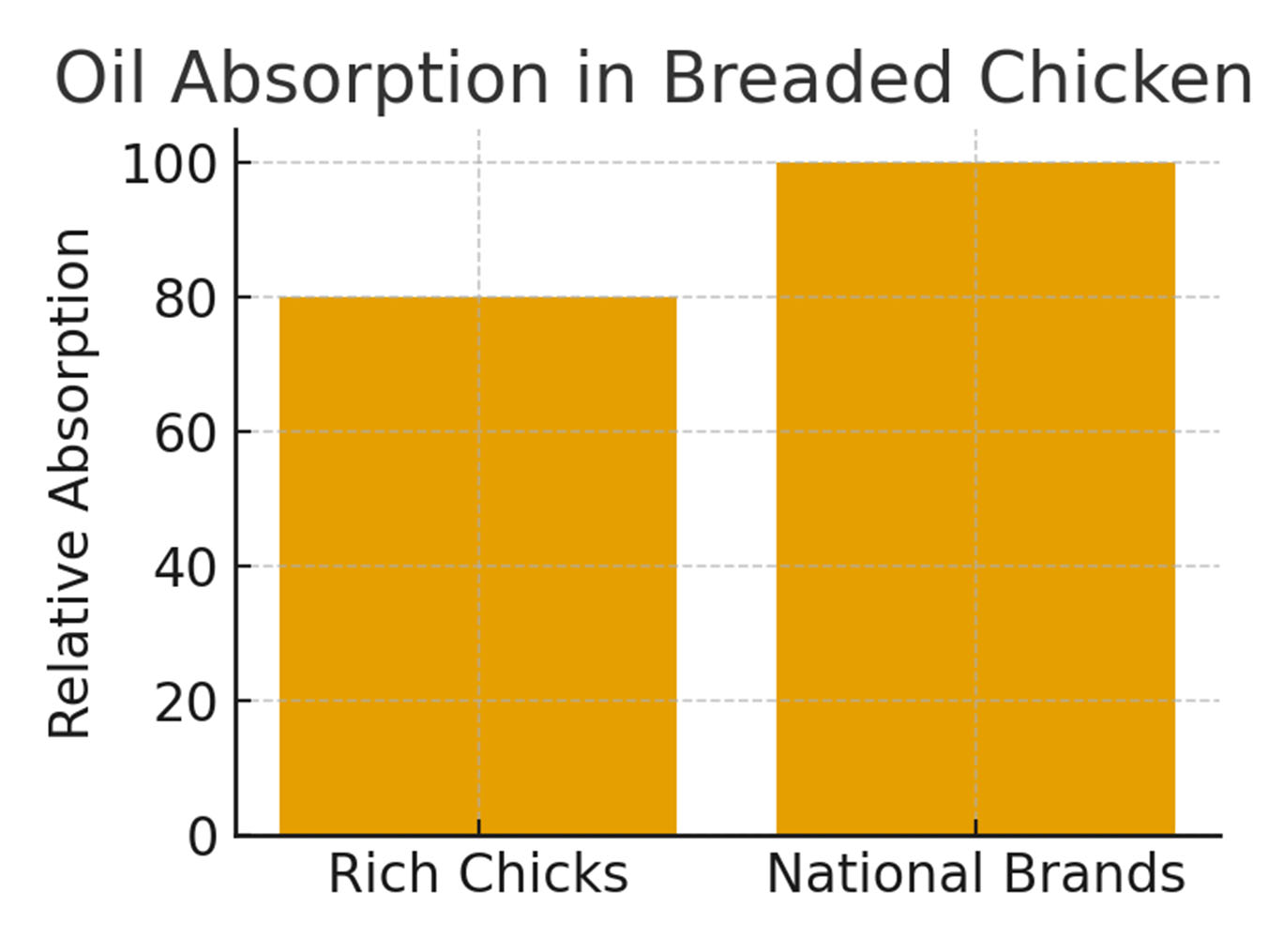
- Product Innovation: Proprietary breading formulations with added chicken protein reduce oil absorption by ~20% compared to national brands.
Together, these practices position Rich Chicks as an industry leader in addressing consumer concerns while safeguarding product quality and nutritional standards.
“Unsaturated oils are healthier nutritionally, but more chemically unstable during frying — requiring strict monitoring and filtration.”
Introduction
The purpose of this paper is to contextualize discussions around seed oils in commercial frying, particularly in breaded poultry products. It outlines key definitions, current scientific evidence, and Rich Chicks’ operational safeguards to ensure oil stability and food quality.
Key Definitions
- Saturated Fats – Stable, solid at room temperature, but raise LDL cholesterol when consumed in excess.
- Unsaturated Fats – Chemically less stable, liquid at room temperature, but reduce LDL cholesterol and improve heart health.
- Free Fatty Acids (FFAs) – Released when fats break Elevated levels drive insulin resistance, metabolic stress, cardiovascular risk, and obesity-related complications.
Key Point: Unsaturated oils are healthier but more prone to chemical breakdown under high heat and storage conditions.
Seed Oils in Commercial Frying: Use and Concerns
Seed oils are the industry standard for frying breaded poultry due to performance, availability and cost-effectiveness. However, concerns have arisen that when poly- unsaturated fatty acids (PUFAs) are heated to frying temperatures (~170–180 °C), they are vulnerable to oxidative breakdown, increasing FFA levels and potential health risks.
Repeated heating produces harmful lipid oxidation products (LOPs), including aldehydes, ketones, and polymerized fats.
Seed Oils and Cholesterol: Established Benefits
Extensive nutrition research, including studies led by Dr. Christopher Gardner at Stanford, confirms that replacing saturated fats with unsaturated seed oils lowers LDL cholesterol and reduces cardiovascular disease risk.
Large population studies consistently show that diets richer in unsaturated fats are linked with reduced mortality rates.